Someone in a brain injury support group had questions about guardianship, so I shared a bit of our experience, since we have guardianship of Veronica. I added Veronica’s age to my comment. She is 32 years old.
Do you ever find other people’s suggestions unwanted or unhelpful? The most recent suggestion I received was, “I don’t know your story, but you ‘should’ relinquish guardianship so she can become more independent.”
I have a suggestion. If you need to say, “I don’t know your story,” it is not a good idea to share a judgement you have made about what you think someone else “should” do. I did not answer that comment. Most of you know, if you follow my blogs, guardianship of Veronica is necessary to keep her safe. Veronica cannot manage money. Okay, for that there is conservatorship. Veronica has poor decision-making skills. The worry is that she will go with someone if asked if she thinks they are nice, or if she is attracted to them. Some of her decisions may put her in danger.
Once a few years ago someone suggested we “should” let Veronica volunteer, work, or go to school. “She’ll be fine, you are not giving her a chance.” They said. We have many times. We love Veronica. We are trying to let her grow. She once went through all the steps to be able to volunteer at Memorial Hospital Central. She received wonderful care there, and she wanted to give back. She got the necessary shots, and I filled out paperwork. Veronica needs lists because she doesn’t remember more than two steps in a row. The volunteer coordinator made sure lists were prepared to accommodate Veronica’s need for them. She got a uniform, an exciting, huge step! In volunteering, she was going to do whatever she was asked to help out. I dropped her off at the front door of the hospital and it was up to her to get to the seventh floor, the rehab floor, by herself. We had practiced several times. A few hours later she came back to our car where I was waiting at the front of the hospital, where we agreed I would pick her up. She said, “I made some friends.” She was smiling and felt so positive. Two days later, the volunteer coordinator called and said it was reported to her that Veronica flirted inappropriately with a therapist. He felt uncomfortable and he turned her in. She was politely asked not to return.
Even social events can be a problem, so we keep an eye on Veronica. She likes to drink… too many sometimes. We tell her when she has had enough. Even one drink can change her behavior and can cause her to become disrespectful toward her dad and me. Others at the party will hear us limiting Veronica, and say, “You ‘should’ let her drink. She is an adult.” We continue to guide her and say, “No more drinking!” And strangers will sneak her shots behind our back. They think we won’t know. Before long, Veronica is loudly flirting with guys inappropriately, sexually. They can be young, older, married, single. She is ready to show lots of skin. These people don’t know our situation, but think they know better than we do about how we “should” treat Veronica.
“You ‘should’ let her work,” people say as if we have never given her the chance or opportunity. Veronica, as I said, has a hard time remembering steps of a process, and flirts and speaks sexually to others, sometimes both men and women, no matter the situation or who is around. We went through a vocational rehabilitation office, and they suggested she volunteer at a small restaurant/coffee shop where at the end of three weeks she would get an evaluation, where they would tell us if Veronica could begin working in a paid position. She would be wiping down tables, cutting up food, and washing dishes. She could do what was asked of her well but was unable to do the jobs without continual guidance. She was not given a paid position. That opportunity ended.
People have suggested we “should” get Veronica counseling to help her control her inappropriate speech and behavior, as if we never thought of it ourselves. Over the last 16 years, Veronica has seen many professionals and specialists, counselors and therapists included. She even saw a doctor with 40 years’ experience, having treated over 100 people with brain injuries. We went for many months. Sometimes my husband Greg and older daughter Kylie would sit in, and I always sat in on her appointments to fill in the details that Veronica would forget. The doctor talked a lot about how Veronica “should” say things. We mostly talked about how Veronica speaks and acts around someone she’s attracted to because that is where most of the problems takes place. We took notes for her, and we went over them later. In the end, it did not take away her impulses to speak in an unfiltered manner at times. We have lived with our severely brain injured daughter for over 16 years now, and we surely do not have all the answers; however, people so many times say we “should” do or try things as if the idea has never been thought of by us, her family. I do say, “Thank you,” for people’s opinions, but there has to be a better way to say things that don’t begin with, “You ‘should’”. It is so offensive. Perhaps they could just as easily ask us gently IF we ever thought of these things. It amazes me to no end how often others think they know better. It has so often been said to me, “It is not what you say, but how you say it.”
If you have not walked in my shoes, and I have not asked your opinion, “Please don’t ‘SHOULD’ on me.”
BUT believe me, if I know a comment is coming from a brain injured person, I will always try and be understanding. I am just trying to spread awareness.
Thank you for taking time to read my blog. Like, share, subscribe, and follow. Comments, too, are always welcome. If you subscribe you will receive an email each time I post a new blog.
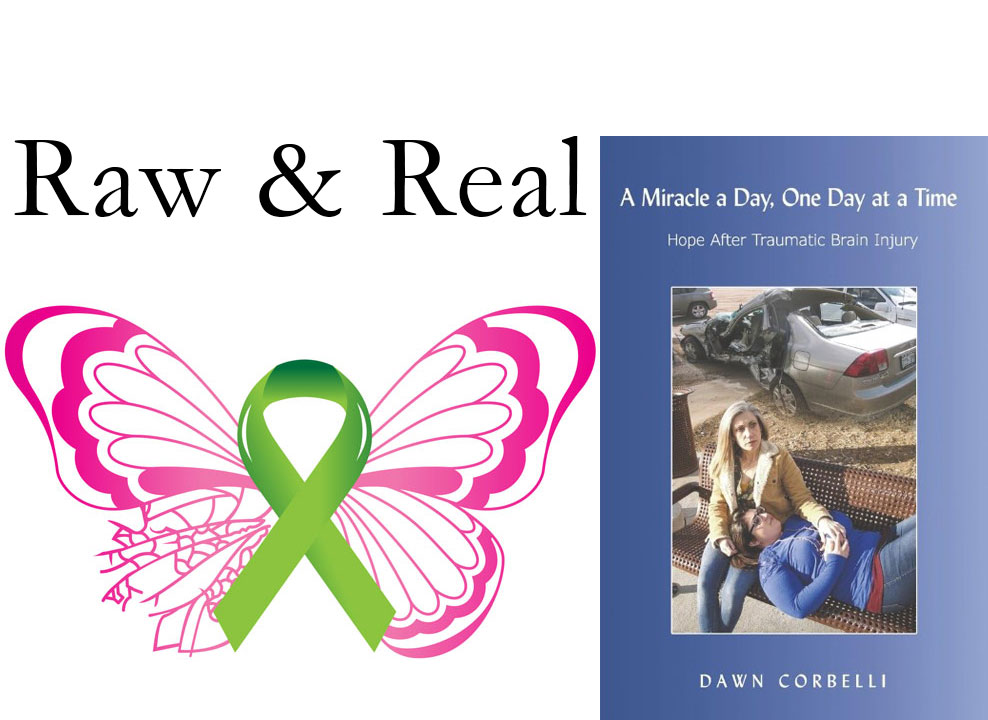
If you would like to know more about our lives and brain injury education, please read my book titled,
A Miracle a Day, One Day at a Time: Hope After Traumatic Brain Injury
Go straight to it by pressing this link if you are interested
https://store.bookbaby.com/book/a-miracle-a-day-one-day-at-a-time
Have a beautiful, blessed week!

 Dawn Corbelli
Well said. In another setting a person was offering unsolicited advice. Once they ended their advice the person it was directed toward said “thank you for your unsolicited advice” and then moved along.
I’m sorry for all the shoulds you get. Personally, I feel like you guys are doing the very best possible in a very challenging situation. I applaud the efforts you all are doing.
LikeLike
Craig you are so kind. I appreciate your support more than you know.
LikeLike
Dawn.
This is a valuable article. It may actually help people to relearn when to speak and when to be silent. 😊
I wrote a response but when I tried to reply it die not allow me to do so without signing in with a password.
I’m hoping it might have gone through. Please let me know one way or the other.
Paul
LikeLike
Hi Paul. It went through. Thank you for your input. And thank you for reading my blog.
LikeLike
Dawn, someone sent this to me the other day and I thought I’d share it with you.
Paul
LikeLike