Our brain injured loved one behaves differently than they used to. You have asked them over and over not to present that inappropriate behavior. Do you believe they don’t change their behavior because they can’t or are they stubborn and simply won’t?
-A survivor is so blunt and unfiltered, many times angry, irritated, irrational, and angry.
-A survivor has been asked several times in the same morning to bathe themselves and brush their teeth, but they don’t.
-A survivor has a plate of food in front of him and it’s lunchtime. He has been asked to eat, but refuses.
-A survivor has been asked to stop pacing and making clicking noises with his tongue and has been asked several times to stop. He doesn’t.
-A survivor needs to make his bed and says he will but keeps sitting in the chair watching tv, all day.
Do you recognize any of these behaviors?
How many things can a moderate to severely brain injured person control? They can be so inappropriate, emotional, restless, have problems with social behavior, refuse to do things, feel unmotivated, and have difficulty starting tasks. The following items I talk about go for people with acquired brain injuries. That means brain injuries that are traumatic and non-traumatic. Let me explain.
- Problems managing emotions – People with a brain injury may have a sudden change in mood; they may also have an extreme emotional response to a situation. They may raise their voice, cry, or laugh.
- Restlessness – people with a brain injury may fidget, pace, or move in a repetitive way. Example, they may sway at an unusual pace.
- Problems with social behavior – People with a brain injury may avoid others, interrupt others, or say things that do not fit the situation or are hurtful. They also may make sexually inappropriate comments.
- Refusing to do things – People with a brain injury may say “No” to do something such as going to therapy or other activities.
- Feeling unmotivated – People with a brain injury have difficulty in engaging in an activity even though they know the benefit of doing it or why it needs to be done. This is not caused by fatigue or laziness.
- Difficulty starting tasks – People with a brain injury may have trouble starting tasks or conversations even if these are things they want to do.
Personality changes often occur soon after brain injury, but the good news is the behavior changes can get better as time passes. People with a brain injury cannot always control their behavior, which is especially true in stressful situations. Causes such as poor sleep, a reaction to medication, change in schedule, and diet changes may set the stage for problem behaviors throughout the day.
Resource: Understanding BehavioralChanges msktc.org
I highly recommend reading this article in full. It is very explanatory of why certain things happen when they happen.
Our family… They got a double whammy having Veronica and I both with brain injuries. We have experienced all of these things. Time and time again we have been asked not to do certain things or behave certain ways. It is often not that we won’t change our behavior, but we can’t. We may forget or have no impulse control. Brain injured people sometimes have negative behaviors because they cannot communicate, and the adverse reaction is the only thing they can control. ie. Biting, hitting. It is hard for you, the person without the brain injury, but for us having the brain injury, it is difficult because we may not know the behavior is coming, it just happens and even we don’t understand why. When you have a brain injury, so many negative behaviors are due to neurological damage. A lot of it is guess work, and no one wants to be told this, but every brain injury is different, and it takes a long time to be able to understand the behaviors of an individual, sometimes never being able to understand, but just knowing it is something they do now. We are 15 years post injuries and some of our negative behaviors have subsided and gotten much better, others are still around, but not often, and some have gone away altogether. I think my worst one to this day is interrupting people while they are talking. It is very rude, and I often tell myself, “I will wait to speak. I will wait to speak.” But inevitably it often occurs, especially with my husband. Oh, and that makes him so angry! He thinks I don’t care about what he is saying, but that is not true. It happens before I can stop it. Another thing that sometimes happens to me is when something goes wrong, I don’t get a little angry. I have yelling outbursts. Again, very rude. I take a prescription medication called Naltrexone that is supposed to calm your amygdala, which is the major processing center of your emotions. It is often very active if you have post-traumatic stress disorder, or PTSD. It works for me many times, giving me time to take a breath and think before reacting, but the times it doesn’t, I see red, my body shakes, and my head explodes right through my mouth. Look Out! The other day I was at a neurology appointment. When I got to the front desk the receptionist checked me in for a tremor when I thought I was there for neuropsychological testing. She said I didn’t even have a referral for that. HOOOLLYYY!!!!! I told them, “I am not here for that. I had my husband drive me for nothing. And with a raised voice I said, “You wasted my fucking time.” My husband leaped to the counter where I was standing and asked me to calm down. Then I turned some of my anger toward him and he said, “I know. I know. We will fix this. Let me talk.” I did need the appointment they said I was there for, but I had forgotten all about it. Then this amazing neurologist did some physical and mental tests, got me referred for two MRI’s, and neuropsychological testing. My memory has been getting worse over the past year, which is not good. Neuropsychological testing appointments are booked all the way until 2025 at that office. The doctor asked them to get me in. They called me when there was a cancellation, and my test is next Thursday. I am thanking the Lord because they could have kicked me out before I ever got to see the doctor.
Many times, as a joke before I go places alone, my husband says, “Don’t get arrested.” I’m not sure how much of that is a joke.
After all these years the biggest thing that still happens to Veronica is flirting with and touching other people. It is so much better than it used to be. She became very sexually oriented after her injury. She used to say many outrageous sexual things that we could not believe would come out of anyone’s mouth, much less our sweet little girl’s. HAHA! She has said things I have never heard anyone say in front of their father before. Read my book. Verbal flirting is not the only problem. She touches faces, necks, and chests and stands really close to people. She no longer has a personal bubble. It has gotten her into dangerous situations in the past and is one of the reasons we have guardianship of her today. She makes poor decisions, and she constantly says, “But I don’t do that anymore.’ Until the next time. I could go on and on with stories, but I will save some for next time.
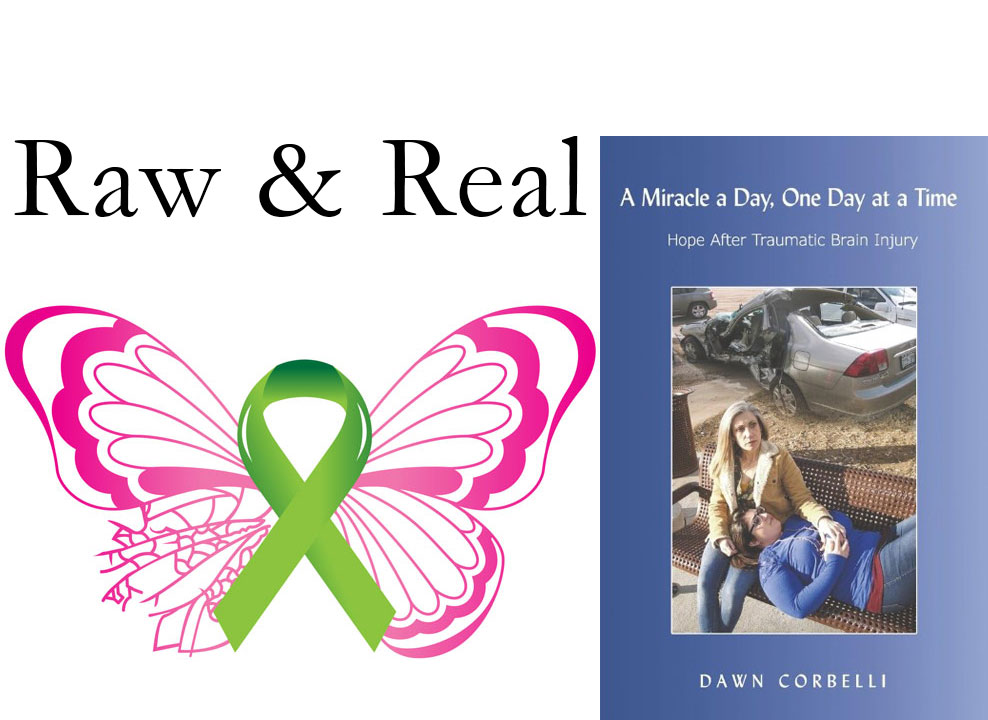
If you are interested in knowing more about our first 12 years of recovery while living with traumatic brain injuries, please read my book titled,
A Miracle a Day, One Day at a Time: Hope After Traumatic Brain Injury
Available almost anywhere books are sold online. Available right here from my website on Amazon. Go to Menu, press Book and purchase it. If you do purchase my book, please write a review when you have finished reading it. I would really appreciate it.
To all those walking this brain injury road, survivors, caregivers, family, friends, YOU are not alone in your experience on this often-lonely road. Do you hear me? It may feel like it, but you are NOT alone. Go on Facebook brain injury support groups. There are so many. They have helped me greatly to not feel like the only family going through this.
Thank you so much for reading my blog.
Have a beautiful week.

 Dawn Corbelli
So when these outburst happen, afterward, what have you found to be helpful in talking to yourself about it to make things better. I find the burst just happens before any control whatsoever is even possible. It is out of my mouth and then I’m left thinking why in the hell can’t I be more in control of what is coming out of my mouth?
LikeLiked by 1 person
Hi Craig. I take Naltrexone which many times helps with the outbursts, but if it’s really bad, I feel so bad afterward. If at all possible I apologize to the person afterward. I still get mad at myself sometimes.
LikeLiked by 1 person
That a good post. I agree, V is not a failure! She has grown so much. I saw the video of her running yesterday and I cried happy tears because I remember that she was paralyzed for quite awhile after the car accident. Both of you are living miracles. ✨️ God still has more for you to do. He’s just getting started and using you to do amazing things. He’s showing through Veronica His grace and healing power. I’m in awe of how wonderful our great big God is and how He uses people who allow themselves be used for His glory. Keep on keeping on 🙂 Love, Tawnie 🥰
LikeLike
Thank you Tawnie. We will continue to keep advocating and sharing what we have learned. We will not let this horrific experience of our brain injuries keep us down. We will do everything we possibly can to help others. Thank you for reading my blog.
LikeLike