How can you not get depressed?
Although I suffer depression as well, I would like to share some of Veronica’s experiences in this blog. Since her brain injury, unfortunately, is more severe than mine, she has lost more than I have through our brain injury experience.
Depression comes with brain injury. It isn’t unusual for brain injury survivors to suffer psychologically after a brain injury. Depression may be due to loss of abilities, hormones being amiss, grief, pain, and other physical symptoms such as headaches, light sensitivity, brain fog, memory problems, poor concentration, to name a few. And how can one not get depressed when they come back from their incident, whatever the cause may be, traumatic or nontraumatic, and they do not know who they are? They may recognize their name, and their family members and friends, maybe, if they are fortunate. But we are lost. Who we used to be is lost. Our passions, hobbies, energy to enjoy them, lost. Even if we do keep the same interests, we are often incapable physically or mentally of being able to continue to do them. All of these make it difficult to work, attend school, engage in social outings, or even get exercise. Recovery can feel impossible, leading to depression. If you have had pre-existing depression, decline in brain health could trigger another episode. Source: cognitivefxusa.com Depression After Concussion: Why You Feel This Way and How to Start Healing. Veronica was depressed for a minimum of the first three years after her severe traumatic brain injury, then on and off for months, even years at a time from then on. And we are 15 years post injury now, she and I. She has been prescribed many different psychotropic medications beginning from about four months post injury when she began to hit when she was angry or frustrated. Some of them worked and some of them didn’t. Some of them worked and then stopped working so we had to try others. The bottom line is, having a brain injury and everything it brings into your life can cause depression.
Veronica went back to high school for her junior year and things were so different than before. Not only did she look different, but she also acted differently, inappropriately, talked about sex incessantly, and she didn’t understand things about her schoolwork that she used to. Shortly after getting out of the hospital after her three-month stay, she began gaining four and a half pounds a week until she had quickly gained 70 pounds. She now had an underactive thyroid; her hypothalamus was damaged. The hypothalamus controls many things, among them, your appetite, metabolism, and body temperature. So here she is in school, in a math class with a teacher that she had been comfortable with because he had previously taught her math. She was not capable of doing the work and he said to her, “I don’t know why you can’t do it now, you used to do it before.” She came home from school that day and asked if her kids would be retarded like her. That was her thought process. It only took six months to a year, and none of the friends that came to the hospital and professed their love for her and that she had to get better, even came around anymore. How could you not become depressed. She knew she was different. She never knew if she was in a dream or if things were real. She kept waiting to wake up and be back in her old life, but she never did. This was it. This was her life now. She didn’t remember if she had eaten or not. She could not tell if she had eaten because she never felt full. A girl at school walked up to Veronica and asked her, “Hey, are you the pregnant girl I heard about.” Veronica’s stomach was cut from sternum to below her belly button. When she gained weight, it did look like she might be pregnant. Veronica used to be athletic and thin and popular. Now she was alone, and strangers were asking her if she was pregnant when she was not. This is what her life had become. I would pick her up after school and if she did not have physical, occupational, or speech therapy, she would sleep. Junior year she only went to school for half a day because she was too tired to stay awake the whole day. She slept for probably 18 hours a day that first year, and still she took naps for hours years after. She still does.
I am simply positive that although we do not all have the same story, many things on our journey are similar. Our deficits, our loneliness, our physical pain, our mental anguish, our anger, all real for all of us and all depressing. That is why I write my blog. Because so many of us feel lonely, I want you to know you are not alone in your experience. We are in it together.
Although Veronica still suffers depression on and off, we have chosen to take the good times we experience and concentrate on those. We find the positive in our lives. Even when she or I are depressed we still talk about our blessings to remind ourselves. Blessings are hard not to find if you look for them.
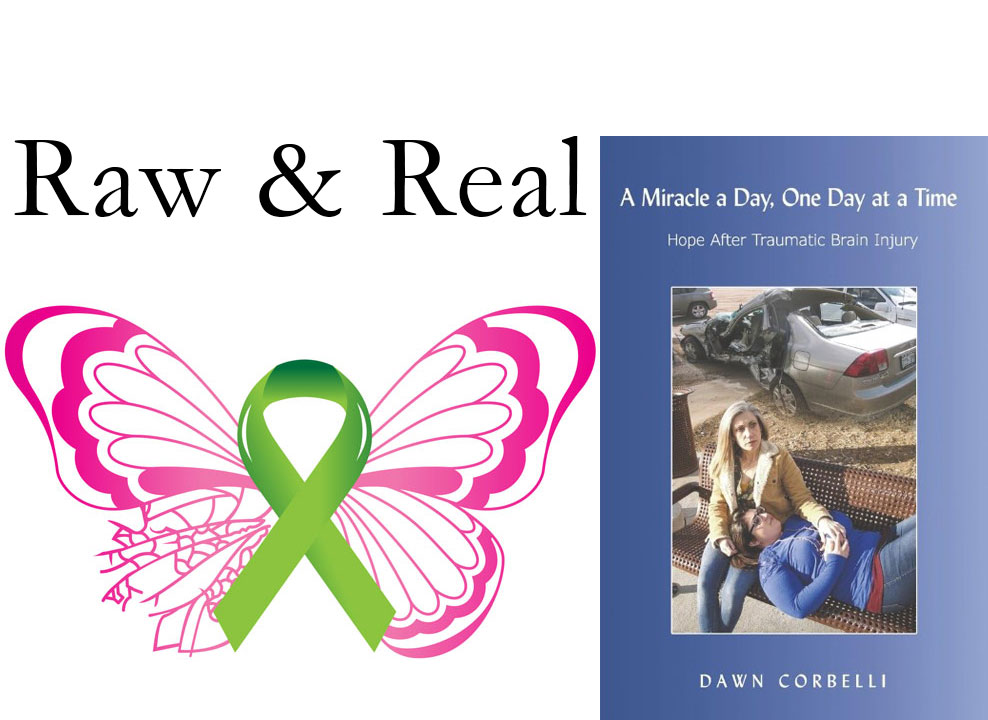
If you would like to learn more about our lives as we live having brain injuries, please read my book titled,
A Miracle a Day, One Daya t a Time: Hope After Traumatic Brain Injury
It is available at Poor Richards Books and Gifts in downtown Colorado Springs. It is available most places online and you can buy it off Amazon right from my website. Go to the Menu and press Book and it will come up.
We need to never forget for a moment that our family members and friends do suffer as they experience this brain injury life with us. It can be excruciating for them too. That I will write about in another blog.
Have a beautiful week my supportive readers. Please know that I appreciate you taking the time to read my blogs.


