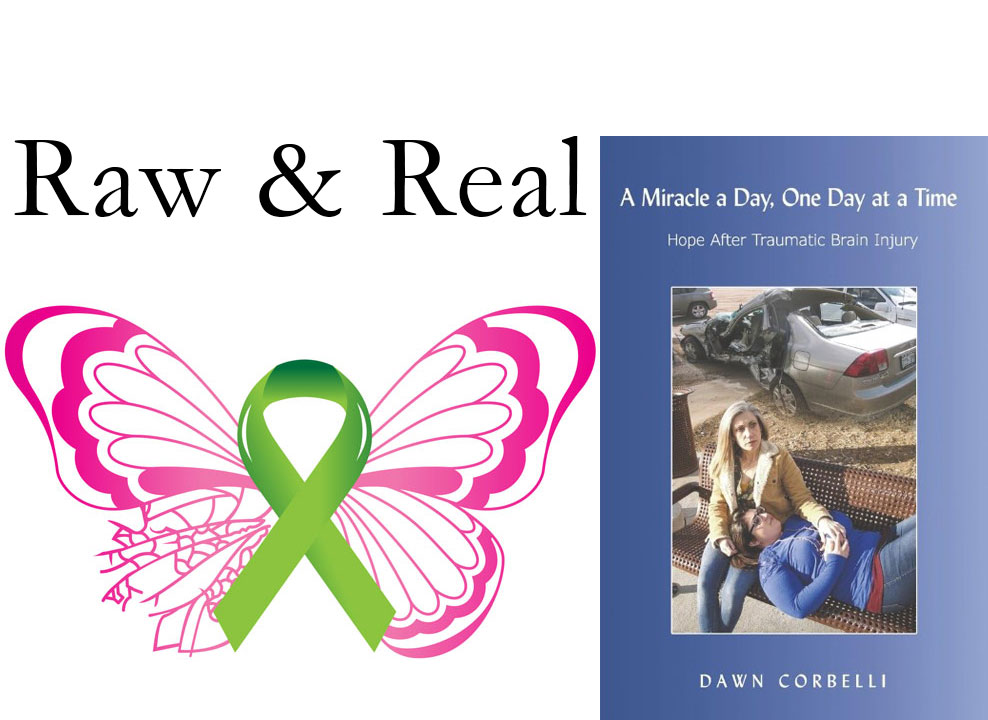
There are more than 5.3 million individuals in the United States who are living with a permanent brain injury-related disability. That’s one in every 60 people. At least 2.8 million Americans sustain traumatic brain injuries in the United States every year. Source: 2023 Brain Injury Association of America. Brain Injury Awareness Month. Brain Injury Awareness in the News and Media Inquiries.
There are two types of brain injuries, both are acquired. One is traumatic and the other is nontraumatic. Acquired brain injuries can be sustained by a blow to the head, brain surgery, an accident, illness or disease, an infected mosquito bite or lime disease from an infected tick bite, a mouth or sinus infection, alcohol or drug use, and oxygen deprivation, just to name a few. Some of these were a surprise to me when I learned this. More people than you may realize have brain injuries, possibly even someone in your life that you know behaves differently than you, but you did not know why.
Although brain injuries may occur for different reasons, the road through recovery is often similar. Many brain injured people acquire the same deficits, behaviors, and inner suffering.
Some things non brain injured people say to brain injured people can be very offensive and even hurtful without meaning to be. I am here to educate and advocate for brain injured people today. I am on both sides of the fence as far as being a brain injury survivor and a caregiver. This helps me understand both sides better.
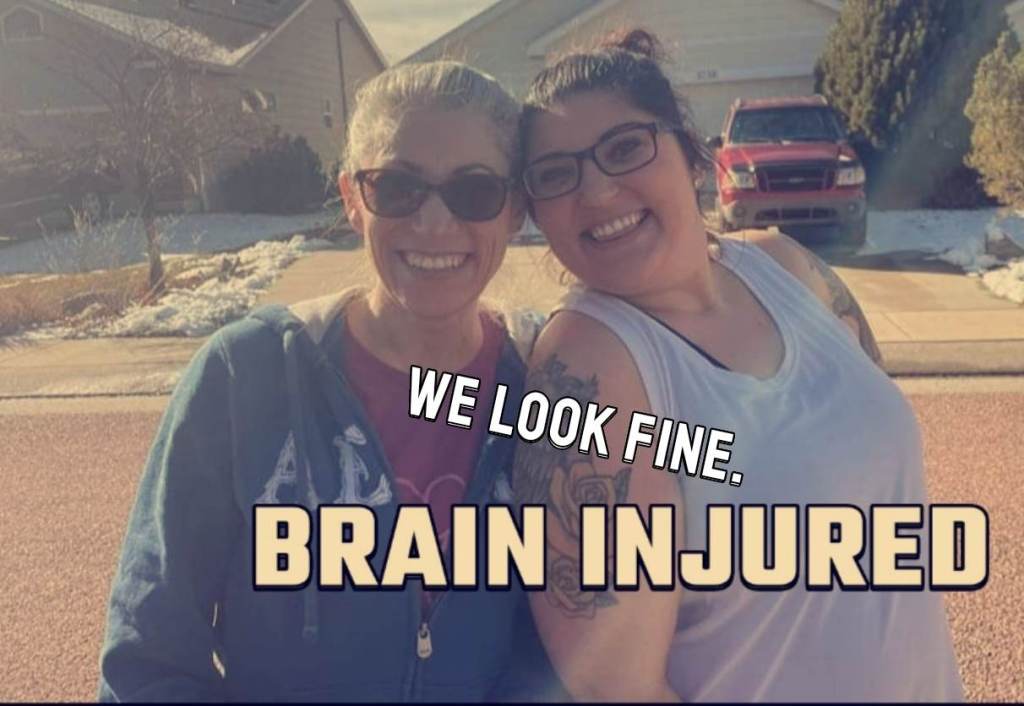
When I am talking to someone about mine and Veronica’s accident and brain injuries, as happened the other day, a person said to me, “It’s a good thing you’re fine now.” Many still often say, “You look great. You must be fine.” I no longer argue the point, but many things go through my mind about what people see compared to what is reality. I am so very fortunate that I do not suffer chronic headaches from the serious hit I had to my head in our accident, but Veronica is not so fortunate. She does get chronic headaches. You cannot see that constant pain by merely looking at someone unless they are wincing visibly from the pain. Our physical appearance has absolutely nothing to do with how our brain functions. We have many deficits that cannot be seen from the outside, and I would like to share those with you today. You cannot see that a person may become overstimulated by noise, too much chatter, loudness. I am overstimulated by all of those. After a while I need to excuse myself and sit in the quiet. The noise is too much for my brain. What happens? I will feel overwhelmed, become anxious, and often speak in a very irritated manner. I become exhausted and sometimes I will cry while in this situation. Some cannot go into a grocery store because they become confused about what to get because there are so many things in front of them. They are unable to make a choice. Also, the bright lights can be overstimulating. And another thing people cannot see is the lack of ability to count money. Many brain injured individuals forget how to count money. For a long time, years after Veronica’s severe brain injury, she would be at the checkout counter of a store and just grab the money she had, hold it out in her hand and let the cashier take what was due. That’s dangerous and she would never count her change because she couldn’t count change. Reading, that was another problem that took years to resolve itself. I look like a “normal” adult, but I would put words together like a five-year-old just learning to read. I have short-term memory loss, get lost in a sentence and it will sound all jumbled in my head. I process slowly and people sometimes speak too quickly for me to understand or comprehend. I will often ask my husband what he said and need him to repeat himself. Sometimes he thinks I am not listening or can’t hear him, but I cannot keep up with the speed of his speech. When this happens often, it can become irritating to others. But it is not something I can control. I have aphasia, or loss of ability to understand or express speech, making finishing sentences difficult because I cannot find my words. A brain injury is called an invisible disability because no one can see any of these many deficits just by looking at us or anyone else having a brain injury. People often expect too much of the brain injured population because we look “normal.” People that don’t understand brain injuries many times, think that a brain injured person is faking any one or all these deficits. I assure you. It is very difficult living this way and we would not fake something so painful. Thinking we are faking is hurtful to the core of our being because we struggle and have not chosen to be this way. You can’t see it. But we are injured.
I know it is such a temptation, and I have done this to Veronica myself, but it serves no purpose to say, “Remember? We talked about that.” Or “I just told you,” to a brain injured person. My personal least favorite is, “I just told you.” If I remembered I wouldn’t ask again. You may think this gets frustrating for you, but it is very frustrating for us too.
In ending, with all the changes in our personality after a brain injury, if you as a friend or loved one does not show that you accept us the way we are, we will not learn to accept ourselves. You see someone you no longer recognize, but we have become strangers to ourselves. Have compassion. What if this was you?
If you would like to learn more about brain injuries, please read my book titled,
A Miracle a Day, One Day at a Time: Hope After Traumatic Brain Injury
It is available many places online, and can be ordered right here from my website. Go to Menu and press Book and it will come up and you can order.
Have a beautiful week and be nice to everyone.

 Dawn Corbelli
I also have similar experiences. I do suffer from vision issues. My wife is living seperately immediately after my TBI. My parents and sister were my caregivers after my TBI
LikeLike
I’m sorry you have had similar experiences. All these deficits can be hard enough to handle without people not taking the time to try and understand.
LikeLike