My last blog was part 1of 2, titled, With Every Up Comes a Down
Recap:
I have bipolar disorder. After being on the same dose of my mood stabilizer for many years, I became so exhausted it was hard for me to think. Just functioning, trying to do everyday tasks, was becoming a huge challenge. With the guidance of my psychiatrist, I was gradually lessening my mood stabilizer to see if I could be stable and at the same time in less of a fog. For several weeks I felt great, less tired, I was thinking more clearly. With every passing week I had more energy. It was wonderful! But by about 12 weeks on a lowered dose, my mood became so good, too good, high. With this, one often makes poor decisions with reckless behavior. I was heading there fast. I became too energetic. I became manic. Since with every up comes a down, I was soon deeply depressed. After raising my medicine again to almost the previous dose, I had to wait weeks to become stable again. It actually took about two months.
—————–
By the time the raised dose of medicine kicked in, I was feeling the same tiredness I experienced before it was lowered. It’s not quite as bad, but I was still very discouraged by this. Again, I became less functional. My mood was stable, but I wanted more than that. I wanted my cheery, creative, and productive side that I used to have back. I got to the point where I took months off writing my blogs. That was disappointing to me.
Greg and I had a talk.
I was taking 2 hour naps each day, and again not able to accomplish all I wanted to. Sometimes with bipolar disorder, as with anything really, one must be willing to compromise. I just have to accept that in order for the medicine I am on to keep me stable, there are some side effects I will have to learn to live with.
Being stable allows me to enjoy my family without being verbally aggressive, having anger and rage, not being so impulsive in manner and with money, so I don’t disrupt our environment and my family’s lives; and still have the ability to do many things that are important to me, but not all. This is my survival and finding a way to be satisfied and live a happy life is very important. To do this, it is sometimes necessary for one to lower their expectations of themselves. With the support of my family, I am able to do that. I am so so sorry for those that don’t have that support.
After our talk, and I know this sounds drastic, I decided I had to come to terms with why I believe I was put on this earth… that is to be a mom and wife… the best mom and wife I can be. Because my medicine makes me so tired sometimes, I am not always able to concentrate and think clearly. I must take my good moments where I do have energy and clear thoughts to do the things I like as well as the things I need to do. I like writing blogs to post. I feel like by sharing my vulnerabilities maybe even one person can relate and feel less alone. That is important to me. This may not be every week as before, but I am pretty sure I can still write a worthwhile one every couple weeks or every month. I am not completely back to myself. Sometimes it takes months to become regulated again after a major episode of depression or mania. I must stay hopeful that with time I will get there again.
My brain is different. I not only have a mental illness, but I also have a brain injury. Both slow my processing, comprehension, and memory. My capabilities might not be all that I really want them to be, but…
Slow is still is moving; Slow is still helping outsiders. My family comes first. No, me first, then the care of my family. Wife and mother are my priorities on how I give my energy while I am on this earth, because those things are most important to me. The rest is a bonus.
Think about it for a minute. How many things do you put pressure on yourself to do in your life?
To be honest, many of the things we stress about doing are niceties, not necessities.
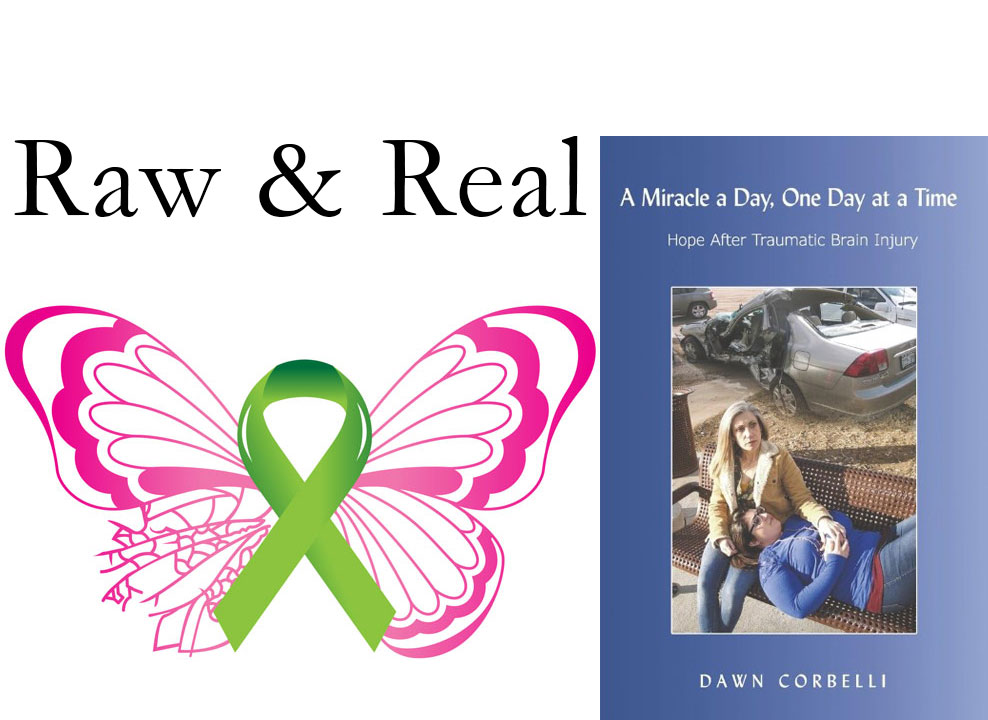
If you would like to read more about our family as we cope with having brain injuries and mental illness, please take a look at my book titled,
A Miracle a Day, One day at a Time: Hope After Traumatic Brain Injury
It has been endorsed by a neuropsychologist and a Clinical Psychologist. It is also on the list of resources suggested by the Brain Injury Association of America (BIAA) and the Brain Injury Association of Colorado.
Have a blessed week.

 Dawn Corbelli
Dawn, you write beautifully and truthfully. Thank You!!❤️❤️I
LikeLike
Thank you Paul. And thank you for reading my blog.
LikeLike