Veronica has fallen and hit her head several times in her life, as many children do. She fell off the monkey bars at school and landed on her head. Veronica had gone to the nurse’s office because she felt like throwing up, and they sent her back to class. We never even got a call from the school. I honestly do not know if they even let her rest first. Another time she was sledding with her dad on the same sled, and they hit a rock, and it tipped over. Her dad landed on her, bending her neck, and her head hit the ground. Another time, yes, another time, Veronica was walking our very large dog, a Black Lab. He saw someone and unexpectedly pulled her so hard her feet left the ground, she fell onto her shoulder, and her head bounced off the cement. Now when I look back, that is so terrifying. She never let go of the leash, so the dog did not get away, but feeling a bit woozy, she still had to get them both home by walking a block back to our house. All I saw was her shoulder with road rash and blood on it. I took care of the cut and asked Veronica if she was ok. She said she had a headache and felt sick. The only one we called the doctor about was when she was pulled walking the dog. We were told it was probably a concussion and to bring her to the emergency room if her symptoms got worse. We had no idea what the word concussion even meant. I knew nothing about brain injuries at that time, so we didn’t think any more about it except to ask Veronica how she was feeling now and then. She was never able to study for school. She couldn’t concentrate and had a very short attention span. Her grades were average, and we thought it was because she wasn’t trying. For all we know now, that could have been because of one of or all of her injuries. Mild concussions can have cumulative effects.
Think how often someone, maybe even you, with a brain injury, goes to the doctor and shares their symptoms, shortcomings, deficits, and they, or you, are not understood. So often the doctor either thinks it is a mental health condition and says you should see a psychologist for therapy or a psychiatrist, or sometimes there are so many complicated symptoms they think you are making it up. And in the military, as we see military providers, doctors, Physician Assistants, Nurse Practitioners, we are not always able to see the same one every time and so often we have to share our situation, living with brain injuries over and over again. It is unbelievably frustrating to me that most doctors know very little about brain injuries. It is so discouraging. They are professionals and we do expect them to understand what is happening to us.
So many times, you hear, “It’s just a concussion. They’ll be fine.” That is not always the case. Did you know a mild concussion can have lifelong effects?
I want to educate others about concussions/mild TBI’s, because I do not think they are being treated seriously and they should be by everyone. A concussion is often referred to as a mild TBI. Both terms are used when a person experiences a change in normal brain function for longer than a few minutes following trauma. Concussions are usually not life-threatening, but their effects can be serious.
Effects from a concussion can range from a mild to severe and may include one or more of the following symptoms:
- Change in vision
- Confusion
- Feeling of drowsiness
- Feeling like you may have “lost time”
- Hard to arouse
- Headache
- Loss of consciousness
- Memory loss, or amnesia of events before the injury or immediately after; and/or
- Nausea/vomiting
Resource: Is a concussion the same as a mild traumatic brain injury?
Only 5 to 10% of concussions result in a loss of consciousness. A concussion is an injury from a direct blow to the head, neck, or face- or a force directed somewhere else in the body that transfers the force to the head. Symptoms can occur immediately or may evolve over time. Research shows loss of consciousness does not affect the long-term prognosis or recovery. A concussion is a functional change to the brain rather than a structural injury. No abnormalities will show on a standard imaging, like an MRI or CT scan.
Resource: 5 Misconceptions about concussions that does not mean you won’t have deficits
Diagnosing a concussion involves an exam in several areas:
- Symptoms- headache, fogginess, emotional symptoms
- Physical signs- amnesia, potential loss of consciousness
- Behavioral changes- irritability
- Cognitive impairments- slow reaction time
- Sleep disturbances- such as insomnia
Resource: 5 misconceptions about concussions Carly L. Mattson, PT, DPT
The difference between concussion/or mild, moderate, and severe TBI is the length of time of being unconscious. Duration of loss of consciousness: Classified as mild (mental status change or loss of consciousness for less than 30 minutes), moderate (mental status change for 30 minutes to 6 hours), or severe (mental status change for mor than 6 hours). Resource: March 19, 2024. Classifications and Complications of Traumatic Brain Injury https://emedicine.medscape.comThey share many of the same symptoms, but a moderate and severe TBI may have more symptoms. From a moderate or severe TBI, it is expected that one would have ongoing symptoms from their injury/deficits. But persistent symptoms are possible after suffering even a minor concussion as well. Resource: Post Concussive Syndrome: Persistent Symptoms Diagnosis + Treatment. Dr. Alina Fong Ph. D Updated 28 June 2024 Medically Reviewed by Dr. Mark Allen Most concussion symptoms resolve within 14 to 21 days. Some people may find that they persist much longer
When this happens, it is called Post Concussive Syndrome. One can even have Post Concussive Syndrome permanently if he or she does not receive treatment, but often resolves or improves with the right therapy. Resource: Post Concussive Syndrome: Persistent Symptoms Diagnosis + Treatment. Dr. Alina Fong Ph. D Updated 28 June 2024 Medically Reviewed by Dr. Mark Allen
Now we all know when we find out someone has only or just gotten a concussion, it can have lasting effects and cause difficulties for a lifetime. It can be serious or undervalued just because it starts with the word mild. There is nothing mild about it.
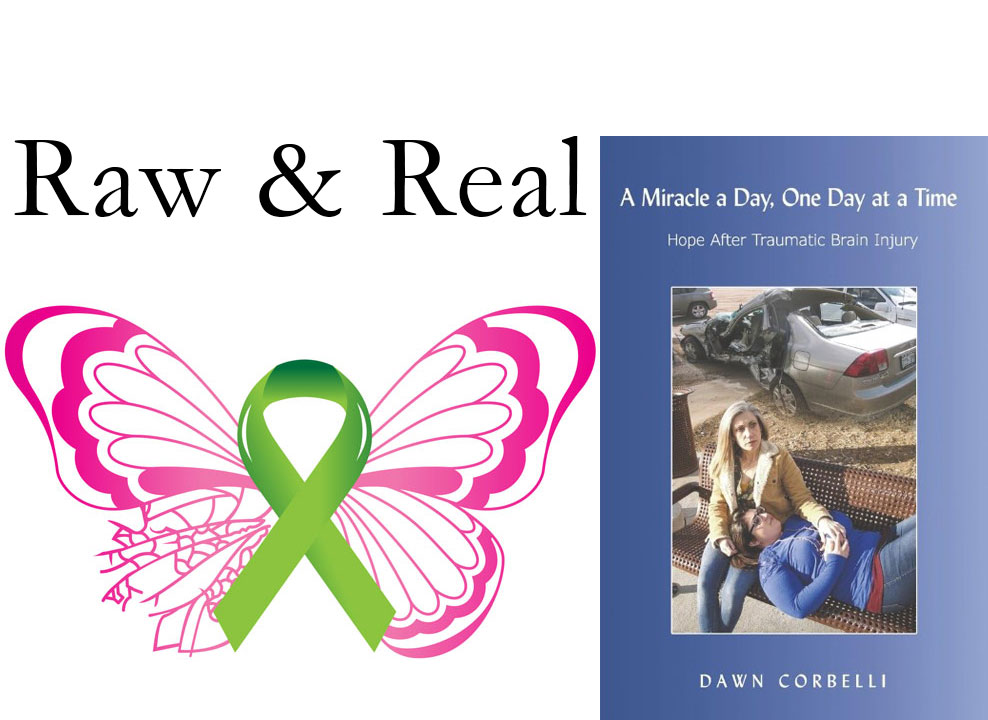
Hopefully by reading my blogs you can become more educated about what you are experiencing and know you are certainly not alone on this difficult journey. If you would like to learn more about the first 12 years of our journey as Veronica and I both suffer from brain injuries due to the same car accident, please read my book titled,
A Miracle at a Day, One Day at a Time: Hope After Traumatic Brain Injury
Available many places online. If interested, the following link will take you directly to it.
https://store.bookbaby.com/book/a-miracle-a-day-one-day-at-a-time
Please, please, do not let any doctor make you feel like he thinks you are crazy, for lack of a better word. You know your body and mind better than anyone. And if you do suffer any amount of memory loss, please, if at all possible, have someone you trust go with you to your medical appointments. They can advocate for you and sometimes the doctor may listen better if you have someone to advocate, or stand up, for you.
Have a beautiful and blessed week everyone.

 Dawn Corbelli