For years Veronica thought she was going to die. “Why plan for the future?” Veronica would say. Even when she got out of the hospital, and she and her boyfriend were together, she didn’t want to take her birth control pills because she wanted to have a baby so she could leave something of herself behind. Did you constantly have the feeling you were going to die or something really bad was going to happen to you or your loved ones after your brain injury? I couldn’t watch the news or anything with violence in it because it would scare me, and I would cry hysterically. I was so traumatized by what happened to us that to this day, if I think one of my family members is supposed to be home at a certain time and they aren’t, I get frantic and believe they are dead in a car accident. We have tried to resolve this from happening by leaving a note on the microwave if we are going to be longer than expected, or are sure to call each other to lessen the worry.
Veronica felt like she was trapped in a dream. Have you felt like you were in a dream state after your brain injury? Or have you as a caregiver heard your loved one say their life feels like a dream? Veronica didn’t know if she was on earth or in heaven. Everyday felt the same. She had no memories from the day before. Going to bed at night, her mind would reset. She kept waiting to wake up from this bad dream, but she never did. She finally disappointedly figured out that this is her life.
Feeling like you’re in a dream state when you really aren’t can and does happen to many people that have brain injuries. Doctors refer to this as, depersonalization (DP) and or derealization (DR). Symptoms of derealization include:
- When you often or always feel that you’re seeing yourself outside your body.
- Feeling that people and your surroundings are not real, like you’re living in a movie or a dream.
- Feeling emotionally disconnected from people you care about, as if you were separated by a glass wall.
- Surroundings that appear out of their usual shape or are blurry or colorless. Or they may seem like they only have two dimensions, so they’re flat with no depth. Or you could be more aware of your surroundings, and they may appear clearer than usual.
- Thoughts about time that are not real, such as recent events feeling like the distant past.
- Unrealistic thoughts about distance and the size and shapes of objects.
Bouts of depersonalization-derealization disorder may last hours, days, weeks, months. In some people these bouts turn into ongoing feelings of depersonalization or derealization that may get better or worse at times.
Causes of depersonalization-derealization disorder is not well understood. Factors that may raise the risk of this condition include serious trauma, serious stress, depression or anxiety, and drug misuse. It can make it scary and hard to function. They can:
- Make it hard to focus on tasks or remember things.
- Get in the way of work or other routine activities.
- Cause problems in relationships with your family and friends.
- Make you feel anxious, depressed and hopeless.
The main treatment for this disorder is psychotherapy/talk therapy, and sometimes medicines are also used. Resource: Depersonalization-derealization disorder mayoclinic.org
People with a TBI may be more likely to experience DP/DR when they have PTSD. Stress levels are substantially heightened for people with TBI. Whether stress comes from the difficulty of having had a traumatic experience, from the challenge of living with changes to one’s abilities, from the emotional changes that can accompany a brain injury, or from a combination of these factors, stress levels are likely to be high. If you would like to read the full article, go to: Resource- Why Does Everything Seem So Surreal After Brain Injury https://www.brainline.org<author May 22, 2013. Veronica would tell us she felt like she was in a dream, often for close to three years. Even now, 16 years post injury, she sometimes has to ask if something that happened is real, or was it a dream?
Brain injuries can affect anyone who has one in such peculiar ways. All I want to do is share what I have learned and hope I can support others by helping them feel validated and understood. We feel so much less alone when we know others are going through similar things.
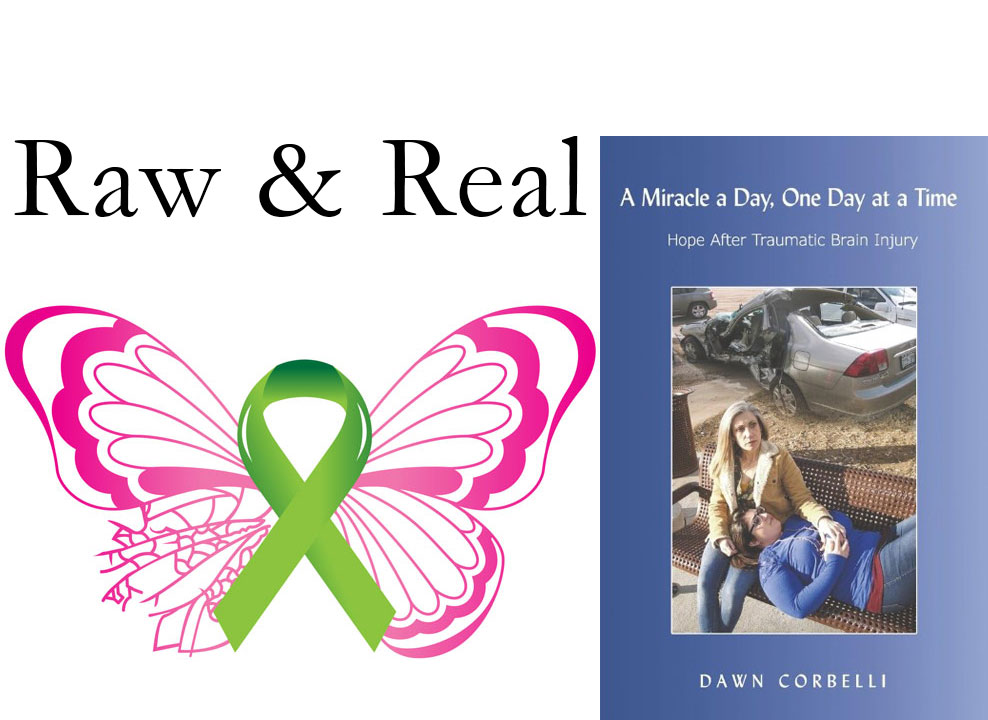
If you would like to learn more about our lives as brain injured survivors and me as a caregiver, wife, and mother, please read my book titled,
A Miracle a Day, One Day at a Time: Hope After Traumatic Brain Injury
https://store.bookbaby.com/book/a-miracle-a-day-one-day-at-a-time
Please like, subscribe, and comments are welcome. Let me know how I am doing.
If you subscribe, you will be sent a notification by email that I have posted a new blog.
Let me know if there are any subjects you would like to be researched or written about.
This is officially my 71st blog. Remember to go back and look at others from earlier. You may find some that interest you.
Have a beautiful week.

 Dawn Corbelli