As many as 98% of people who have experienced a Traumatic Brain Injury have some form of fatigue. It can become a significant barrier to participating in the activities they want and need to do in daily life. Resource: Fatigue After Brain Injury biausa.org
Veronica and I team teach high school students between the ages of 14-18-year-olds about traumatic brain injuries (TBI), brain injuries in general. There is one thing I forget to mention that I will give attention to in the future in these classes, on podcasts, and on interviews I participate in. It is exhaustion. I forget to talk about the fact that after teaching 2, one and a half hour classes each, I go home and often feel like throwing up from the exhaustion I feel. I keep going until the nausea comes and I hit a wall. Recently we taught 2 classes each day two days in a row. I love teaching, sharing information, hope, and inspiration. But WOW! It takes so much of my energy. I must lay in the still and the quiet afterward. I must sleep. I am a mother and a wife. I am part of a family and need to do mom, wife things, like make dinner. Sometimes, on these days of exertion I just can’t. Anytime I need to get information, instead of going out I make phone calls as much as possible. Going to different places after my brain injury can be so draining. I used to work or go to school, run errands, exercise, and do things around the house, all in a day. That life is no more. I am not complaining. I am stating facts and sharing my life, as it is now.
The reason we suffer so much exhaustion after a brain injury is because it takes our brain so much more energy to function than a non-injured brain. Fatigue is a feeling of exhaustion, tiredness, weariness, or lack of energy. After TBI, you may have more than one kind of fatigue. There are 3 types: physical, psychological (can’t get motivated, possible feelings of depression), and mental. Fatigue can have a negative effect on your mood, physical functioning, attention, concentration, memory, and communication. It can interfere with your ability to work or enjoy leisure activities.
To decrease fatigue:
- Pay attention to what triggers your fatigue, such as becoming more irritable, or distracted. Stop an activity before getting tired.
- Get more sleep and rest.
- Set a regular schedule of going to bed and awakening the same time every day. Include some regular rest breaks or naps.
- Improve your time management.
- Plan and follow daily schedule. Using a calendar or planner can help mental fatigue.
- Prioritize activities, finish what is most important first. Do things that require the most physical or mental effort early in the day.
- If visitors make you tired, limit them.
Resource: Fatigue and Traumatic Brain Injury msktc.org
Honestly, I write, “stay home. No appointments,” in my calendar on Tuesdays and Thursdays to keep from over- exerting myself. 16 years later I still have trouble not pushing myself too hard.
Before the exhaustion, Veronica and I taught our first class of the day. She is energy filled and oh so humorous. Do any of you now have an amazingly humorous side? Veronica has found hers for sure. Sometimes Veronica wants to be a comedian, and she could. But only when the mood strikes. Here she stands, in front of the class in her pretty summer dress and jokes how before she learned how to walk properly, she leaned to one side and walked like the Hunchback of Notre Dame. Then she says “I want more freedom. My dad says I can ride my tricycle around our neighborhood.” It’s her body language, her tone. The whole class broke out in laughter. We absolutely lighten up about our sadder things in life. It’s laughing or crying. Almost all the time we choose to laugh.
After teaching two classes in a day, the second one, where we are so run down from utilizing our energy on the first one, we came home, so exhausted I was nauseous, and Veronica cried so much that evening. Too much mental fatigue makes it so Veronica cannot control her emotions, her thoughts. We realize we cannot do too much before we can’t do anything. After our two days of teaching, we stayed in the following day and rested and slept. We did manage to drag ourselves out for a 2-mile walk, trying very hard to incorporate exercise in our lives. That is a double-edged sword. If we don’t exercise, we are tired. If we do exercise, we are tired.
With the abundance of energy and humor spent teaching our first class of the day, came so much reward. We were applauded by the students. They gave us pictures they had drawn, thank you notes, hugs, so much appreciation! We are educating many young people about brain injuries. We ask them in the beginning to take out a piece of paper to hand in at the end with one constructive help. We want to know if we can improve our presentations in any way. Also, they write a question if they have any, and one thing they learned. We received so many “Thank You” notes. The fourth class we taught last on the second day. We were run down, mentally fatigued, which caused physical fatigue. We had very few jokes to tell and little physical energy to move around. Our tone was different, setting a lower mood as the kids listened. Our speech was less organized, I forgot more words, and had trouble finishing some sentences. Veronica became hurried and a little irritable toward me. Also, with two classes in a row, we forget if we already shared information with them or the first class. I feel the students deserve the same memorable experience the earlier class got. They saw the real everyday… US, which is ok, but when we are upbeat the kids remain more interested and willing to learn. And we find what we are doing much more enjoyable. We have decided it would be better for everyone if we do not teach two classes in a day in the future when we have a choice.
Although at first, I was disappointed at some of their comments after that class, I am no longer. They saw who we are, and that is perfectly OKAY. Although not quite as fun or interesting as when we shared so many personal stories earlier, we did share good information. They still learned about brain injuries from us. We did exactly what we came there to do and that is definitely a win.
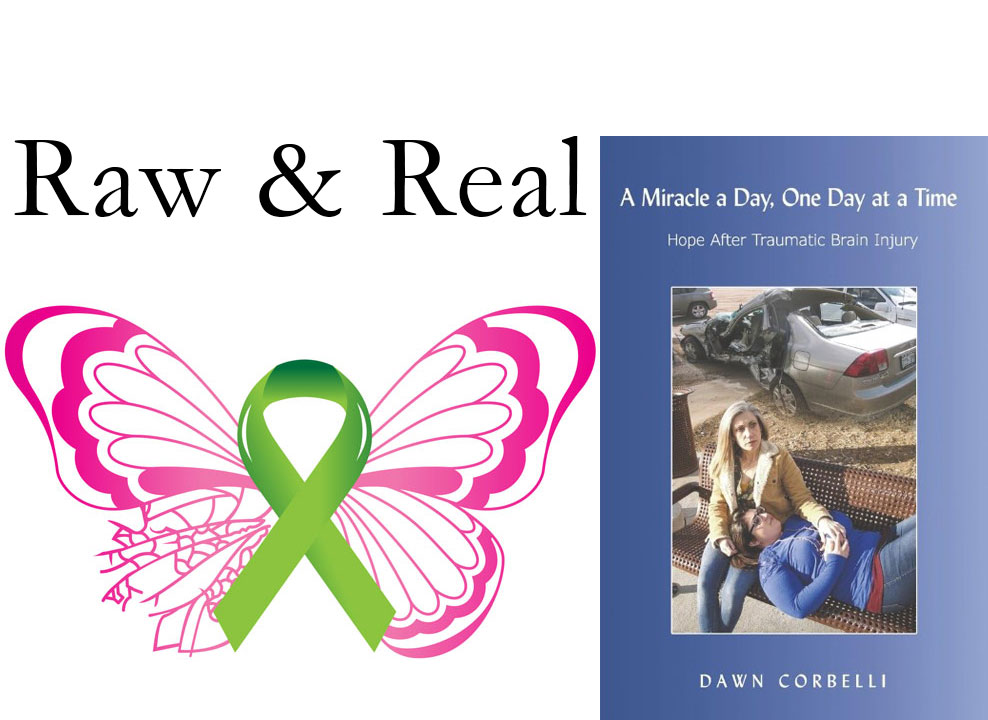
If you would like to learn about the trials and triumphs of the first 12 years of our recovery, please read my book titled,
A Miracle a Day, One Day at a Time: Hope After Traumatic Brain Injury
https://store.bookbaby.com/book/a-miracle-a-day-one-day-at-a-time
Help where you are capable and leave the rest to others. Have a beautiful week.

 Dawn Corbelli
Dawn,
Thank you for the insight. You are the Lord’s angel of knowledge on TBI.
As I read through this report I suddenly remembered that when I was part of the poetry in the school’s program. I would have them combine the classes. They don’t like to do that, but I always explained that as a volunteer, I still have other things I’m responsible for.
However, if they want my poetry program they need to understand I don’t have the time or energy to do multiple classes. If I let them know days in advance of my scheduled time there, they had enough time to prepare. One time they brought five classes into the auditorium.
It was a blast.
Hope this is helpful
Shalom
Paul
LikeLiked by 1 person
Hi Paul.
We have had three classes listen in one classroom before. That is fine. I am not ready to teach in an auditorium at this time. I don’t know if I will be in the future or not. Seeing a crowd is difficult for me. It is overwhelming and often overstimulating. It would be much louder in an auditorium. But as always, I do appreciate you reading my blog and sharing your thoughts. Thank you.
LikeLike