Doctors saying you have a mild traumatic brain injury can be misleading because there is nothing mild about it.
Mild-not severe, serious, or harsh Resource: Oxford Languages, Mild
I am going to define concussion, mild, moderate, and severe traumatic brain injuries.
Mild traumatic brain injury-concussion-loss of consciousness for 30 minutes or less. A concussion is referred to by doctors as a “mild tbi”. Both terms are used when a person experiences a change in normal function for no longer than minutes following a trauma. Concussions are not usually life threatening, but their effects can be serious. Affects from a concussion can range from mild to severe and may include the following symptoms: change in vision, confusion, feeling drowsy, feeling of “lost time”, hard to arouse, headache, loss of consciousness, memory loss (amnesia)of events before the injury or immediately after, and or nausea and vomiting. Resource: Is a concussion the same as a mild traumatic brain injury? uab.edu
How is anything about that considered mild? It sounds extremely traumatic to me, yet it is often referred to as just a concussion. It is a mild traumatic brain injury. The name eludes us to believe it’s practically nothing…mild.
You don’t even have to lose consciousness to get a concussion or experience post concussive syndrome. In fact, the risk of developing these symptoms doesn’t appear to be linked with the severity of the injury. Outwardly you may seem fine. In most people symptoms appear within the first 7 to 10 days and go away within 3 months. But sometimes they can last for a year or more. This is called post concussive syndrome. In addition to other symptoms, you may also suffer irritability, anxiety, trouble sleeping or sleeping too much, loss of concentration and memory, ringing in the ears, blurry vision, and noise and light sensitivity. Resource: Persistent post-concussive symptoms (Post concussive syndrome) Mayoclinic.org
There are four stages of concussion. If you want information on these, go to Concussion grades: How to distinguish degrees of concussions oadviewhealthcentre.com
Diagnosing a mild tbi is not easy. Mild tbi’s are not visible on imaging tests, so doctors must diagnose patients based on the symptoms they report. Resource: Mild vs. Moderate vs. Severe Traumatic Brain Injuries Oct 2, 2019
There is absolutely nothing mild about any of this. This is a life altering injury. You would think when the word mild is used, the consequences to this injury would be as the definition suggests…not severe, serious, or harsh. All of these symptoms are severe, serious, and harsh.
Moderate tbi. That is what I have. If you sustain a moderate tbi, you will lose consciousness, which may last as little as a few minutes to as long as a few hours. Moderate tbi victims can experience memory loss, confusion, and other physical, behavioral, and cognitive symptoms for days or weeks. Unfortunately, some moderate tbi victims will experience these symptoms for the rest of their lives. Resource: Mild vs. Moderate vs. Severe Traumatic Brain Injuries masonlaw.com Cognitive refers to problems remembering, difficulty speaking, understanding, and problems concentrating, learning new things, or making decisions that affect their everyday life. Resource: Cognitive symptoms cancer.gov Imaging tests are used to diagnose moderate tbi’s. The tests allow doctors to assess the location and extent of the damage. A moderate to severe tbi can include the same symptoms of a mild tbi. However, they may also suffer consistent headache that worsens, pupil dilation, clear fluid draining from the nose or ears, seizures or convulsions, inability to wake up, weakness or numbness in the toes and fingers, extreme confusion, loss of coordination, combativeness, agitation, or other unusual behavior, slurred speech, and much more. Resource: Traumatic Brain Injury (TBI) ninds.nih.gov Feb 7, 2023. This article is very inclusive of physical, cognitive/behavioral, perception/sensation symptoms and consciousness levels. I highly recommend reading it for even more tbi details.
Severe TBI: Many severe tbi’s are fatal. Non-fatal severe tbi’s can lead to permanent cognitive, behavior, and physical changes. Even after months of rehabilitation, victims will never return to their pre-injury condition. For this reason, a severe tbi impacts every aspect of a victims life. Severe tbi victims lose consciousness for over 24 hours and may spend days, weeks, or even months in a coma. Resource: Mild vs. Moderate vs. Severe Traumatic Brain Injuries Oct 2, 2019.
Veronica, with a severe tbi, went from a coma to a vegetative state, then to a minimally conscious state, and finally came back to consciousness.
Someone in a coma is unconscious and has minimal brain activity. In a vegetative state, which our doctors called an awake coma, there is no awareness of the environment. In a minimally conscious state, the person shows clear but minimal or inconsistent awareness of the environment. Veronica snapped her fingers in this state. Some days she stared off into space and couldn’t interact with us at all and other days she would snap and follow some commands, even smile and seem pretty alert. Even after these alert days, she slipped back. It is very much a one step forward 10 steps back kind of experience. Then if the person is very fortunate, they become conscious, completely aware of their surroundings; awake, again, as Veronica did. Thank the good Lord!!! After this, the injured survivor and their family walk into a terrifying, many times very rewarding, unknown future. We became grateful for even the smallest amounts of progress, wins. Small amounts of progress many times can turn into large amounts, but a little at a time.
I never realized a mild traumatic brain injury, or concussion, could be so traumatic. I have learned a great deal by researching and writing this blog.
Veronica and I go to high schools and teach mostly about moderate and severe brain injuries, but for sure we will delve into the effects of mild tbi’s more deeply from now on. The repercussions may not always last very long, but now we all know they can. There are many students that have suffered concussions from sports in the classes we teach.
I always have more I want to write, but this blog has become long enough. I will have to save my stories for another day. My goal today was to share some education on the types of brain injuries because just their titles tell us little to nothing about them.
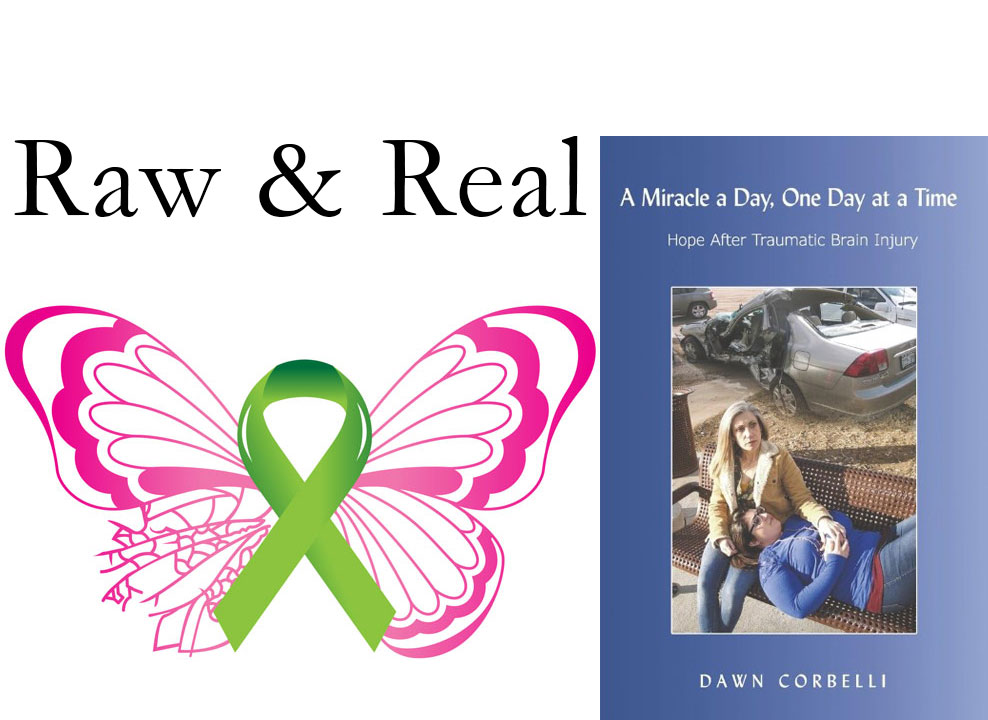
If you would like to read about the first 12 years of our recovery after our brain injuries, please read my book titled,
A Miracle a Day, One Day at a Time: Hope After Traumatic Brain Injury
Copy this link and paste it in google and you can purchase my book from there. https://store.bookbaby.com/bookshop/book/index.aspx?bookURL=A-Miracle-a-Day-One-Day-at-a-time
Hopefully this information will help you understand what you or your loved one is going through or has gone through. I’m very sorry if this information does apply to you because that means you or someone you love has a brain injury. I am saying a prayer for you today.
Like, follow, and subscribe and you will receive an email every time I post a new blog.
Find your blessings in today, even the smallest ones, and today will be a better day.
See you next week.

 Dawn Corbelli